
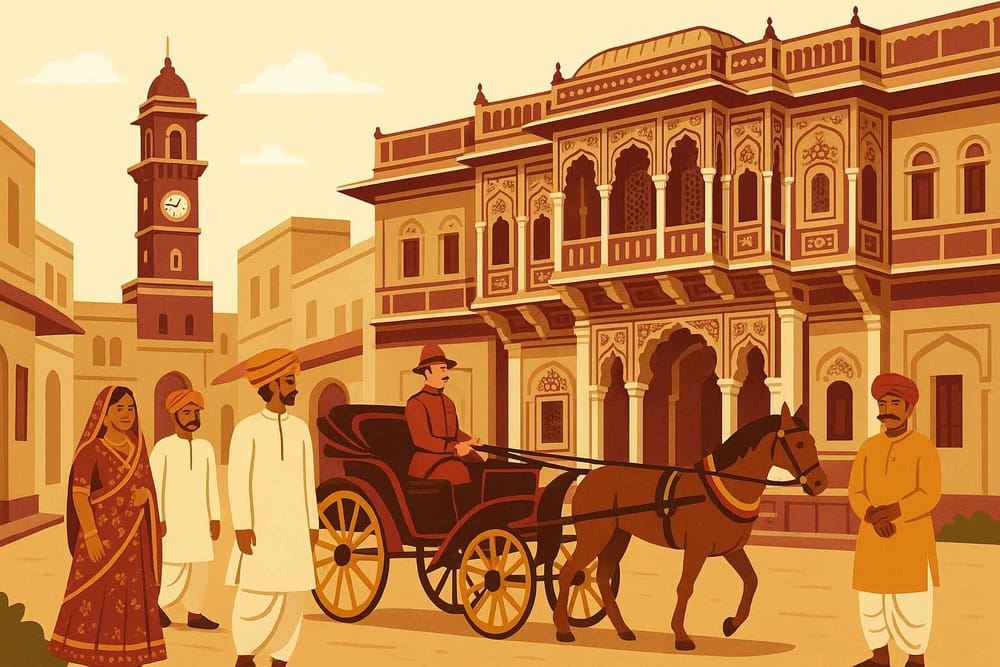
British Influence on Sikar- A Historical Journey
Kabhi aap Sikar ki galiyon se guzre hain? If you have, you know there’s a special magic in the air. Ek taraf, you see grand havelis covered in beautiful frescoes, telling stories of Rajputana शान (splendour). Aur doosri taraf, you might notice a solid, old administrative building that speaks of a different time – a time when India was under British rule. It’s this beautiful, sometimes complicated, mix of two very different worlds that makes Sikar’s history so fascinating.
This city, nestled in the heart of the Shekhawati region, wasn't just another princely state. It was a bustling hub of art, culture, and trade, long before the British set foot here. Let's take a journey back in time to understand how Sikar gracefully handled the winds of change during the colonial era, holding onto its soul while adapting to a new world.
Before the British Era: The Shekhawati Spirit of Sikar
Imagine a time of camel caravans, vibrant markets, and Rajput rulers. That was Sikar before the 19th century. Ruled by the Shekhawat Rajputs, the city was the pride of the Shekhawati region. Its identity was built on a few key pillars:
- A Thriving Trade Hub: Sikar was a critical point on the trade routes that connected Rajasthan to the rest of India. The local merchants, or 'Marwaris', were known for their business acumen, and their wealth is still visible in the magnificent havelis they built. These weren't just homes; they were statements of art and prosperity.
- Art and Architecture: The frescoes of Shekhawati are famous worldwide, and Sikar was at the heart of this artistic explosion. The walls of havelis and temples became canvases for artists who painted everything from mythological tales of Krishna and Rama to scenes from everyday life, creating a unique visual diary of their times.
- A Feudal Way of Life: Governance was in the hands of the Rajput thakurs, who managed their lands and people based on age-old traditions and customs. Life revolved around community, honour, and a deep respect for cultural practices that had been passed down through generations.
When Two Worlds Met: The British Arrival
In the early 19th century, the East India Company's influence began to spread across Rajasthan. Sikar, with its strategic location and economic importance, naturally caught their eye. Through a series of treaties and alliances, Sikar, like other princely states, came under British suzerainty. This wasn't a complete takeover; the local rulers kept their titles, but the real power began to shift.
The British introduced new systems of land revenue and administration. For the local farmers and landowners, this meant adjusting to new policies and a more structured form of governance. It was the beginning of a slow but steady transformation of Sikar’s social and economic fabric.
Building a New Sikar: The British Influence on Urban Development
The British era brought significant changes to Sikar’s landscape. While the traditional havelis continued to be built, a new style of architecture and infrastructure began to emerge, creating a unique blend of old and new.
- The Coming of the Railways: One of the biggest game-changers was the introduction of the railway line. Thanks to the cordial relationship between Rao Raja Madhav Singh Bahadur and the British government, a railway line was established connecting Jaipur to Sikar. This turned Sikar into a major trade hub, boosting its economy and connecting it more firmly to the rest of India.
- A Fusion in Stone and Mortar: If you look closely at some of the older administrative buildings or parts of the Sikar Fort, you’ll notice a fascinating architectural style. It’s a mix of traditional Rajasthani design with British Gothic elements, a style often called Indo-Saracenic. This fusion architecture is a physical reminder of the cultural dialogue that took place during that era.
- Modern Education and Amenities: The British also brought with them Western education. New schools were established, introducing English and modern subjects. This opened up new ways of thinking for the younger generation, though the people of Sikar held firmly to their deep-rooted cultural and religious traditions.
Reflecting on a Complex Legacy
It's natural to wonder about the real impact of this period. Many ask how British policies truly affected the local economy. The answer is complex. While new trade routes and the railway brought prosperity, the new taxation systems also brought challenges for the agrarian community. It was a time of both opportunity and hardship.
Similarly, when we think about governance, the British introduced more systematic administrative and legal frameworks. This modernised the way Sikar was managed, but it also meant a shift away from the traditional feudal systems. It was a period of intense change, where Sikar’s people showed incredible resilience. They adapted to new systems while fiercely protecting their cultural identity, a spirit that is visible even today.
This story of adaptation and change isn't unique to Sikar. The British era left its mark across many princely states. For instance, understanding the British presence in Bathinda offers another perspective on this widespread historical phenomenon.
Sikar Today: A Living Heritage
Today, Sikar stands as a beautiful testament to its layered history. The grand havelis still whisper tales of Marwari merchants, the majestic forts speak of Rajput valour, and the colonial-era buildings remind us of a time of profound change. This blend of tradition and modernity is what makes Sikar so special.
Stories like these are the soul of our country. They teach us about resilience, culture, and the beautiful tapestry of our shared past. At Bhaktilipi, we believe in preserving and sharing these timeless stories. If you enjoyed this journey into Sikar's history, you will find a treasure trove of such insightful articles on our platform.
We invite you to explore more about our rich heritage and delve into devotional literature that connects us to our roots. Consider starting with an in-depth look at Sikar's historical journey on our blog.
About Bhaktilipi
Bhaktilipi is a digital space crafted with devotion, dedicated to preserving and sharing the timeless wisdom of our devotional literature. We aim to bridge the gap between traditional values and modern readers, offering authentic and inspiring content that nurtures spiritual growth.
Stay connected with us and enrich your knowledge. Follow us on our social media channels:
Join our community to learn, reflect, and keep the flame of our traditions burning bright.
© 2025 Bhaktilipi – Crafted with devotion.
A passionate group of people dedicated to preserving India's knowledge of Dharma, Karma, and Bhakti for ourselves and the world 🙏.