
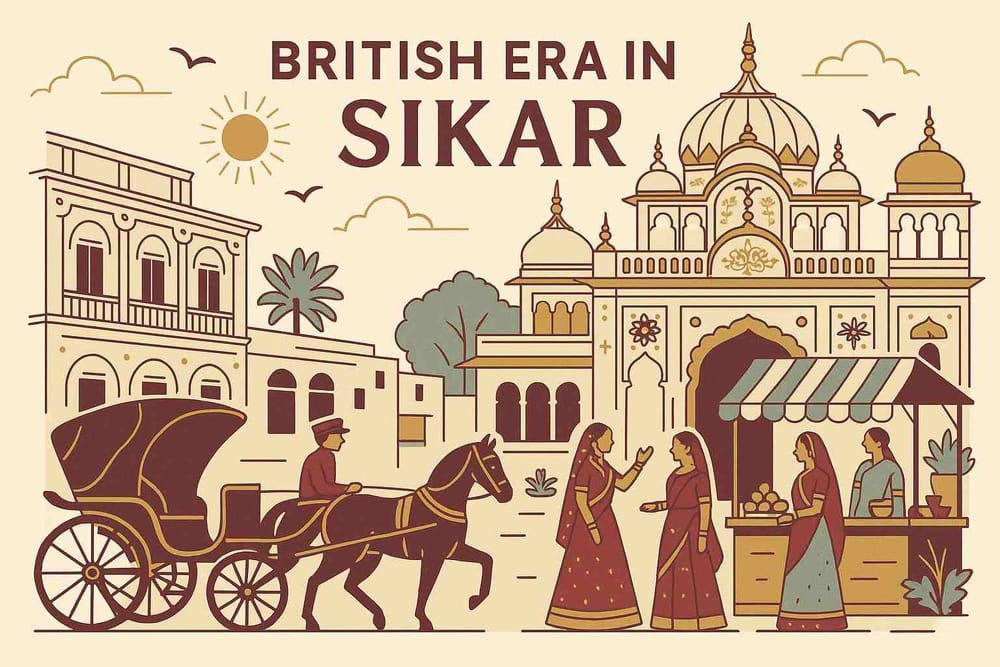
British Era in Sikar: A 144-Year Historical Exploration
Have you ever walked through the lanes of an old city and felt like the walls were whispering stories to you? In Sikar, a jewel in Rajasthan's Shekhawati region, those whispers are everywhere. You see a grand haveli with intricate frescoes telling tales of our gods, and right around the corner, an administrative building with a touch of British design. This beautiful, sometimes complex, blend of two worlds is the living legacy of the British era, a period from 1803 to 1947 that forever changed the city's destiny.
This isn't just a history lesson. It's the story of our ancestors, of how they adapted, resisted, and coexisted, creating the Sikar we know today. Let's take a walk back in time and uncover the chapters of this fascinating journey.
A New Chapter Begins: The Shekhawats and the British
In the early 1800s, Sikar was a proud and strong Rajput kingdom, governed by the Shekhawat dynasty. Life revolved around tradition, agriculture, and bustling local trade. When the British East India Company arrived, it wasn't a sudden takeover. Instead, a series of treaties were signed. This was a clever arrangement that allowed the British to have administrative influence while our local rulers, the Shekhawat kings, kept their authority. It was a complex dance of power, a relationship built on both cooperation and strategic calculation.
The Changing Face of Sikar: Architecture of Two Worlds
The most visible legacy of the British era is etched into Sikar's buildings. The wealthy merchants, or Marwaris, built magnificent havelis that became canvases for their devotion and prosperity. These structures tell a story of cultural fusion.
- Poddar Haveli: This isn't just a building; it's a storybook in stone and paint. The frescoes here depict scenes from our mythology, right alongside images inspired by European art. It shows how our artists were observing and blending new influences into their traditional craft.
- Morarka Haveli: Another stunning example, the Morarka Haveli is famous for its detailed artwork that beautifully mixes Indian and Western themes. It’s a testament to the open-mindedness and artistic spirit of the time.
Beyond the havelis, the British introduced a new architectural style called Indo-Saracenic, which merged traditional Rajasthani designs with Gothic elements. You can see this in old administrative offices and parts of the Sikar Fort, standing as symbols of a time of great change.
Progress and Its Price: Economic Shifts in the Colonial Era
The British era brought a wave of modernisation to Sikar. Thanks to the cordial relationship between local rulers like Rao Raja Madhav Singh Bahadur and the British, Sikar saw the arrival of the railway line from Jaipur. This was a game-changer! New roads and electricity followed, transforming Sikar from a local market into a crucial trade hub. This improved connectivity brought prosperity and new opportunities.
However, this progress came with its own set of challenges. The British introduced new land revenue systems and taxation policies. While these changes aimed to streamline revenue collection, they also altered the traditional agricultural practices that had sustained the region for centuries.
The Heartbeat of a Culture: Society Under the Raj
While the outside world was changing, the heart of Sikar remained deeply rooted in its traditions. Western education was introduced, opening new ways of thinking for some. Yet, the city's soul—its rituals, its faith, and its cultural practices—remained largely untouched. The British generally adopted a policy of not interfering with local religious customs, allowing our traditions to continue and flourish.
It is this very spirit of preserving timeless wisdom that we at Bhaktilipi cherish. We believe that understanding our history is a vital part of our spiritual journey. Our platform offers a space to explore these rich traditions and stories that have been passed down through generations. If you want to dive deeper into how history and culture intertwine, you can explore our detailed article on the British era's influence on Sikar from a historical perspective.
Unpacking the Legacy: Answering Your Curiosities
Many people often wonder about the true nature of this period. Was it a time of oppression or progress? The truth, like most things in life, is somewhere in between. The significance of the British era in Sikar lies in this very duality—it was a period that brought modernisation in infrastructure and administration but also moments of conflict, like the Battle of Sikar in 1859, where local sepoys rose against the East India Company. It shows that our ancestors were not just passive recipients of change; they were active participants in shaping their own destiny.
If you wish to walk through this history yourself, Sikar offers many glimpses into its colonial past. You can still see old colonial bungalows, heritage government buildings, and parts of the railway infrastructure that tell the story of that time. This pattern of change wasn't unique to Sikar; similar transformations unfolded across India, each with its own local story, such as the British era in Bathinda.
So, why is it important to remember this chapter of our past? Because understanding this blend of Rajasthani and colonial heritage helps us appreciate the resilience and adaptability of our culture. It’s a story that has shaped not just the city's skyline, but its very character.
About Bhaktilipi
At Bhaktilipi, we are dedicated to being your digital sanctuary for exploring timeless devotional literature, sacred stories, and spiritual wisdom. Whether you are just beginning your spiritual journey or seeking deeper insights, we bring you authentic content from all corners of India. It's a place to read, reflect, and share the journey of devotion with a like-minded community.
Why Explore with Bhaktilipi?
With us, you can discover unique topics that connect history, culture, and spirituality all in one place. We help you gain knowledge that bridges the gap between ancient traditions and the modern world. Stay connected with our latest articles and stories by subscribing to our newsletter and following our journey on social media.
Preserving Sikar's Rich Virasat
The British era in Sikar is a powerful chapter in its long and storied history. It's a tale of how tradition and modernity learned to coexist, creating a unique identity. As Sikar continues to grow and step into the future, its historical roots remind us of the importance of preserving our heritage. This history is a testament to the resilience of our culture and the spirit of a city that has gracefully carried its past into its present.
A passionate group of people dedicated to preserving India's knowledge of Dharma, Karma, and Bhakti for ourselves and the world 🙏.