Bihar's Languages-Dialects: A Rich Tapestry Explored
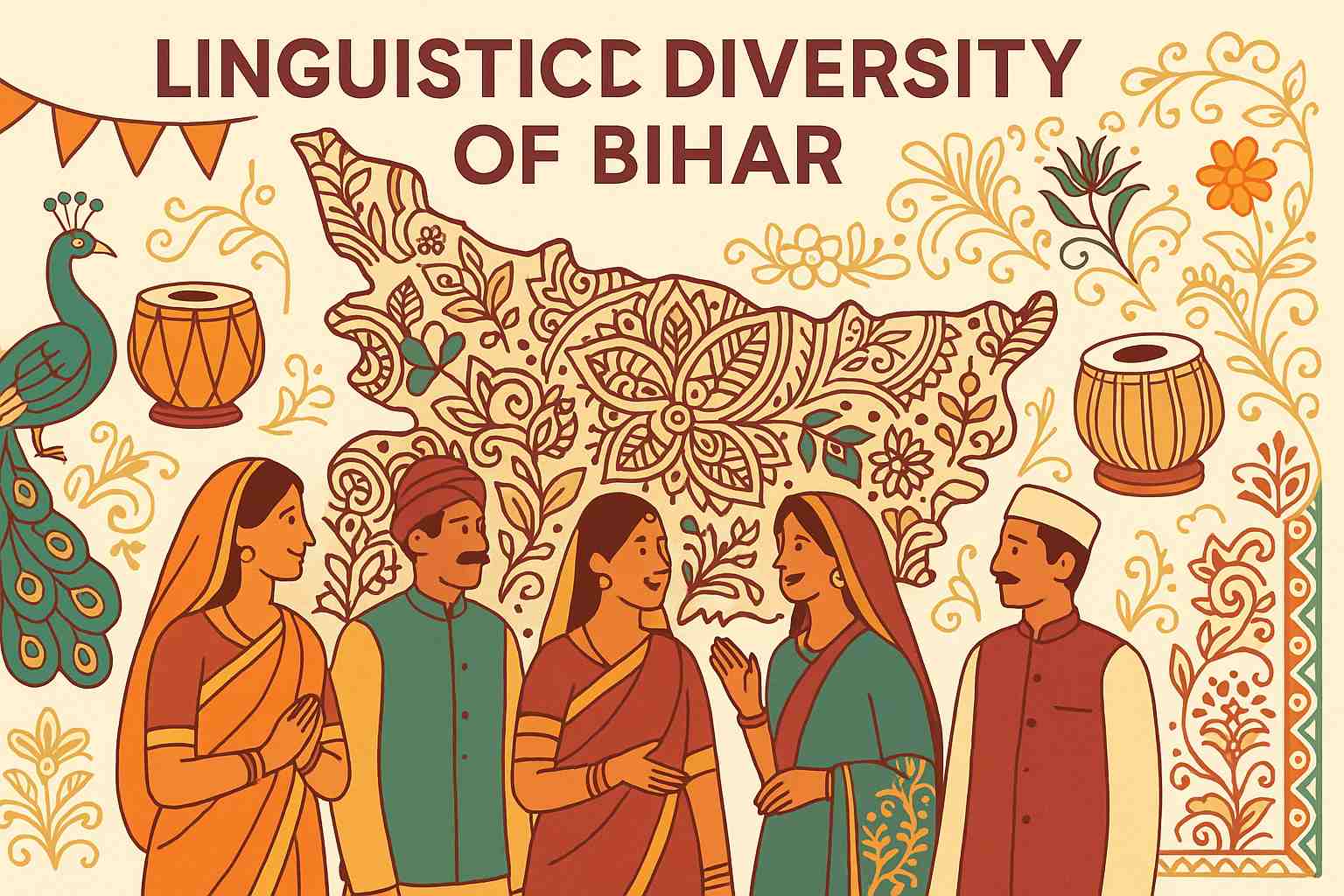
Have you ever noticed how the taste of 'sattu' changes slightly from one home to another? Or how the melody of a folk song carries a different emotion in a different district? That, my friend, is the magic of Bihar. It’s a land where every few kilometers, the air, the water, and even the way words are spoken, changes. This isn't just about different accents; it’s about a deep, rich linguistic tapestry woven over thousands of years, a heritage that whispers tales of empires, saints, and everyday life.
Understanding the languages of Bihar is like listening to the heartbeat of this ancient land. It’s more than just communication; it’s about connecting with the soul of its people and the stories that shaped them.
The Three Pillars: Maithili, Magahi, and Bhojpuri
While Hindi is the official language you'll see on signboards and in government offices, the real conversations, the lullabies, the scoldings, and the heartfelt prayers happen in the region's native tongues. Most people in Bihar are fluent in Hindi, but it's the mother tongue that holds their cultural identity. The state's linguistic landscape is primarily built on three magnificent pillars.
- Maithili: The Language of Poetry and Devotion
Spoken in the northern parts of Bihar, in the land of Sita Mata, Maithili is as sweet as 'makhana'. It’s not just a dialect; it’s one of India's 22 scheduled languages, a testament to its rich literary history. When you hear Maithili, you hear the legacy of poets like Vidyapati, whose verses on Radha-Krishna’s love still echo in the Mithila region. It’s a language that carries art, culture, and deep-rooted traditions in every syllable. - Magahi: The Voice of Ancient Magadha
Travel towards central and southern Bihar, and you'll be greeted by the warm and earthy tones of Magahi. This language has a legacy that can be traced back to the mighty Magadhan empire, the seat of the Mauryas. It is believed to be a descendant of Magadhi Prakrit, the language that Lord Buddha and Lord Mahavira might have used to deliver their sermons. Listening to Magahi feels like connecting to a powerful, ancient past that laid the foundation for so much of Indian history. - Bhojpuri: The Spirit of Celebration and Resilience
Head west, and the air fills with the vibrant, expressive, and lively spirit of Bhojpuri. Known far and wide for its foot-tapping music and a booming film industry, Bhojpuri is a language full of life and emotion. It reflects the hardworking and resilient nature of its people. The cultural richness of the Bhojpuri region is immense, with folk traditions like 'Bidesia' capturing the joys and sorrows of life with incredible passion.
A Journey Through Time: How Bihar's Languages Evolved
The story of Bihar's linguistic diversity didn't just happen overnight. It is a saga written through centuries of history and cultural exchange. The ancient universities of Nalanda and Vikramshila weren't just centres of learning; they were melting pots where scholars and monks speaking Pali and Prakrit shared wisdom that spread across Asia. These ancient languages laid the groundwork for the tongues spoken today.
Later, during the Mughal era, Persian and Arabic words gracefully found their way into local dialects, enriching the vocabulary. The British period introduced English, which became the language of administration and formal education. Yet, through all these changes, the people of Bihar held on to their mother tongues, preserving them through folk songs, stories, and daily conversations. This evolution is what makes Bihar's linguistic identity so unique and layered.
At Bhaktilipi, we believe that these stories and devotional traditions are the soul of our culture. We are dedicated to preserving this timeless heritage in a way that speaks to you. If you feel a pull towards these deep-rooted narratives, you can explore our collection of spiritual texts and stories that celebrate our vibrant traditions.
Beyond the Big Three: The Lesser-Known Gems
The beauty of Bihar's linguistic tapestry lies not just in the prominent languages but also in its many regional dialects. In different corners of the state, you'll hear the melodious flow of Angika in the Bhagalpur region or the distinct rhythm of Bajjika around Vaishali. These dialects, each with its own unique flavour and expressions, add further depth and colour to the state's cultural identity. They are living proof of how diverse communities have thrived together for centuries, each contributing a unique thread to this beautiful fabric.
Preserving Our Linguistic Heritage for Tomorrow
In today's fast-paced world, there's a real danger of these beautiful languages fading away. While Hindi is the primary medium of instruction in schools, a growing awareness is creating a movement to preserve these regional treasures. Efforts are being made to promote Maithili, Bhojpuri, and other languages through literature, cultural events, and local media. After all, when we save a language, we save a world of stories, traditions, and wisdom.
Embracing this linguistic diversity is our way of honouring our ancestors and ensuring that future generations remain connected to their roots. Whether you speak one of these languages fluently or are just learning about them, you are part of a sacred journey that keeps our culture alive.
To stay connected with the heart of India's devotional and cultural heritage, we invite you to be a part of our community. Follow us on Facebook and Instagram for daily inspiration, and subscribe to our YouTube channel for insightful videos that bring these timeless traditions to life.
A passionate group of people dedicated to preserving India's knowledge of Dharma, Karma, and Bhakti for ourselves and the world 🙏.