
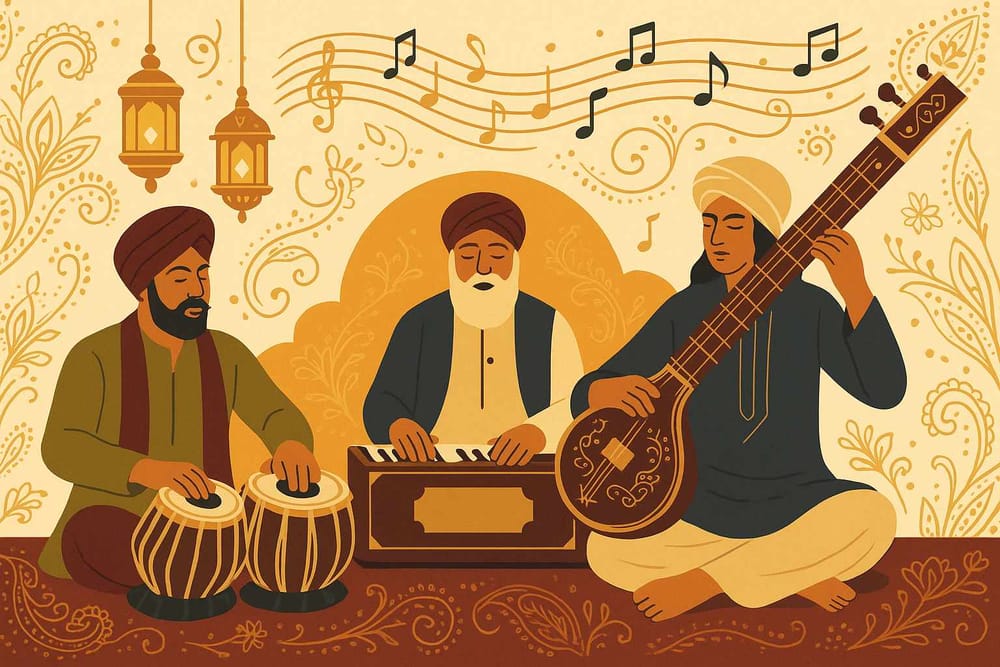
Beyond Bhangra: Punjabi Music's Classical-Sufi Essence
The moment you hear the word "Punjabi music," what comes to mind? For most of us, it’s the powerful beat of the dhol, the infectious energy of Bhangra, and visions of joyous celebrations at weddings. It’s the music that makes you want to get up and dance, no questions asked! But have you ever paused, amidst the joyous chaos, and listened a little closer? Beyond those vibrant beats lies a world of music so deep and soulful, it can transport you to another realm. A world steeped in centuries of classical discipline and divine Sufi poetry. It’s a journey from the feet to the soul, and I invite you to walk it with me.
The Grandeur of Punjab's Classical Legacy: More Than Just Music
Long before it became the life of every party, the music of Punjab resonated in the grand courts of Mughal emperors and the quiet dedication of musical lineages. This is the world of Punjabi classical music, a tradition built on discipline, devotion, and the sacred guru-shishya parampara. It’s not just about learning notes; it’s about inheriting a legacy.
At the heart of this tradition are the famous gharanas, or schools of music. Think of them not just as institutions, but as families bound by a unique musical style passed down through generations. They are the guardians of an ancient art form.
- The Patiala Gharana: A Royal Heritage of Notes
This is one of the most revered gharanas, celebrated globally for its mastery over the khayal style of singing. Listening to a performance from this school is an experience in itself—full of intricate vocal techniques, emotional depth, and a powerful delivery that can leave you spellbound. It was the legendary Ustad Bade Ghulam Ali Khan who carried the flag of the Patiala Gharana across the world, proving that Punjab's musical roots are as profound as they are powerful. - A Living Tradition of Ragas and Riyaaz
In Punjabi classical music, every raga is a universe of emotion, designed to evoke a specific mood, from deep reverence to pure joy. Instruments like the sitar, sarangi, and tabla are not just accompaniments; they are storytellers, weaving magic alongside the vocalist. This rich heritage is kept alive even today at events like the Harballabh Sangeet Sammelan, India's oldest festival of classical music, a beautiful reminder of this timeless art.
Whispers of the Divine: The Sufi Heartbeat of Punjab
If classical music is the discipline, then Sufi music is the divine madness of love. It’s a spiritual journey wrapped in poetry and melody. The Sufi saints of Punjab, like Baba Bulleh Shah and Shah Hussain, didn't just write poems; they penned conversations with the divine. Their words, or Kalams, speak of universal love, peace, and the beautiful pain of separation from the beloved—God.
When this profound poetry is blended with soulful melodies in the form of a Qawwali or a Sufi Kalam, it creates a magic that touches the deepest corners of your heart. The gentle rhythm of the dholak and the soaring notes of the harmonium create an atmosphere where you feel completely connected to something greater than yourself. It’s a form of musical prayer that resonates with everyone, regardless of their faith.
This quest for divine connection through literature and stories is what we cherish at Bhaktilipi. We believe that these timeless words hold the power to inspire and guide us. If the soulful poetry of Sufi saints moves you, we invite you to explore our collection of devotional literature on Bhaktilipi.in, where tradition meets today's reader.
Folk Rhythms vs. Soulful Melodies: Understanding the Difference
So, how is the vibrant folk music different from the classical and Sufi traditions? Think of it this way: folk music is the voice of the land and its people. It's about celebrating life's simple joys—a good harvest, a wedding, a local festival. Its beats are simple, catchy, and full of life, often played on rustic instruments like the Tumbi, Algoza, and Chimta. To feel this energy, you must experience the vibrant folk dances that define Punjab.
Classical and Sufi music, on the other hand, are more introspective. They follow structured patterns (in classical) or deep spiritual themes (in Sufi), aiming to evoke profound emotions and a sense of connection to a higher plane. While folk music makes you dance, these forms make you reflect and feel. Yet, all three are threads of the same beautiful tapestry that is Punjabi culture, each with its own unique colour and texture. For a deeper dive, you can read our exploration of Punjab's vibrant rhythms.
The Old and The New: How Tradition Breathes in Modern Tunes
Does this mean that these classical and Sufi traditions are lost in the past? Not at all! In fact, their soul is very much alive. Many of today’s popular Punjabi artists beautifully blend these ancient forms with modern beats like hip-hop and R&B. They infuse the depth of a traditional raga or the spiritual message of a Sufi poem into a contemporary sound, creating something fresh yet rooted.
Take the example of the incredible Nooran Sisters. While they mesmerize audiences worldwide with their powerful, modern performances, they proudly carry the lineage of the classical Sham Chaurasi gharana. They are a living example of how tradition can not only survive but thrive in the modern world, inspiring a whole new generation.
Frequently Asked Questions About Punjab's Musical Roots
Many of us have questions about the deeper aspects of this music. Let's explore some of them together.
You might wonder, what exactly is the Patiala Gharana?
Imagine a family of musicians, one of the most respected in Punjab, known for its powerful and highly ornamental style of singing. The Patiala Gharana is famous for its intricate vocal techniques and the emotional depth its artists bring to their performances, making it a unique and powerful school within Indian classical music.
What makes Punjabi Sufi music so captivating?
Its magic lies in its universal message of love and spiritual connection. The poetry of great Sufi saints, combined with soul-stirring melodies, speaks directly to the heart. It’s this emotional depth and focus on a personal connection with the divine that makes it so popular and timeless.
Are specific instruments used for these musical forms?
Yes, absolutely. While Punjabi folk music brings out the earthy sounds of the tumbi and dhol, the classical tradition leans on the elegance of the sitar, sarangi, and tabla. For Sufi music, the harmonium, dholak, and sometimes the rabab are chosen to create that mesmerising, soulful atmosphere that supports the vocals.
Who are some of the legendary artists from these traditions?
In the classical world, the name of Ustad Bade Ghulam Ali Khan from the Patiala Gharana shines brightly. When it comes to Sufi music, legends like Nusrat Fateh Ali Khan and Abida Parveen have taken its divine message to every corner of the globe, leaving an indelible mark on world music.
Our Journey at Bhaktilipi
At Bhaktilipi, we are on a mission to be your digital space for exploring and preserving this kind of timeless devotional literature from across India. We bring you sacred texts, inspiring stories, and soulful poems, carefully curated for modern readers like you. We believe that staying rooted in tradition can bring immense peace and wisdom to our contemporary lives.
Stay connected with us for more reflections and devotional insights that can inspire your spiritual path.
Subscribe to our newsletter for timeless wisdom delivered straight to you!
Honoring the True Spirit of Punjabi Music
So, the next time a Punjabi song makes you tap your feet, take a moment to listen beyond the beat. Hear the echo of a classical raga, feel the whisper of a Sufi prayer. Punjabi music is a grand celebration of life, but at its heart, it is also a deep, soulful meditation. By appreciating its classical and Sufi roots, we don't just listen to music; we connect with a rich heritage of art, spirituality, and culture. Let’s cherish this complete picture and ensure the true soul of Punjabi music continues to inspire generations to come.
A passionate group of people dedicated to preserving India's knowledge of Dharma, Karma, and Bhakti for ourselves and the world 🙏.