
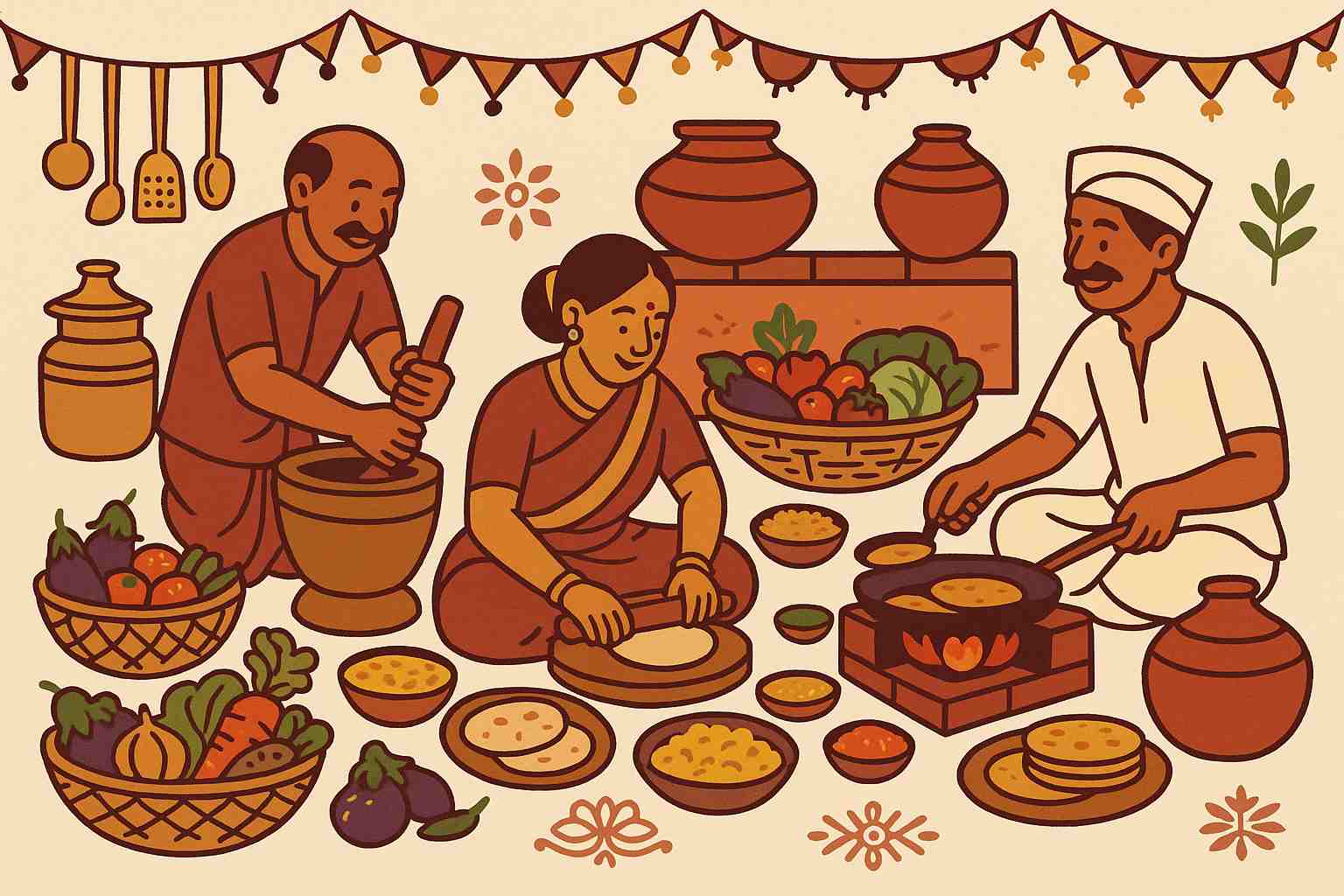
Bara Balutedar System: Culinary Heritage Explained
The Unseen Hands That Flavoured Our Food: A Journey into the Bara Balutedar System
Close your eyes for a moment and imagine a village from our grandparents' time. Life wasn't about one-click deliveries or massive supermarkets. Instead, it was a beautiful, intricate dance of interdependence, a community where everyone played a crucial part. The air was filled with the rhythmic clang of the blacksmith's hammer, the gentle spin of the potter's wheel, and the comforting aroma of food cooked over a slow fire. This entire ecosystem was held together by an ancient framework known as the Bara Balutedar system, the very soul of rural Maharashtra.
This system wasn't just about economics or social structure; it was the heartbeat of the village, influencing everything from festivals to the very food that graced their plates. Let's take a heartfelt journey back in time to understand how these twelve essential service providers—the Bara Balutedars—shaped the culinary heritage we cherish today.
What Exactly Was This Village Framework?
The term 'Bara Balutedar' might sound complex, but its essence is beautifully simple. 'Bara' means twelve in Marathi, and a 'Baluta' was the share of the village's agricultural harvest given to an artisan in exchange for their year-round service. It was a barter system built on trust and mutual respect, ensuring that the village was a self-reliant, thriving unit. Officially abolished in 1958, its spirit of community and artisanal skill continues to echo through our traditions.
- A Circle of Twelve Skills: This framework was composed of twelve key professions. It included artisans like the Sutar (carpenter), Lohar (blacksmith), Kumbhar (potter), and Teli (oil-presser), as well as service providers like the Nhavi (barber) and Dhobi (washerman). Each had a defined role vital for daily life.
- Guardians of Tradition: These Balutedars were more than just workers; they were the protectors of generational knowledge and cultural practices. Their skills were passed down through families, preserving the unique identity of the community, especially its food traditions. This system ensured that every aspect of village life, from farming to feasting, ran like clockwork.
How the Village Artisans Shaped Our Kitchens and Flavours
In the villages of old, every meal was a story of collaboration, a testament to the community's combined effort. The food didn't just appear; it was cultivated, stored, prepared, and served with the help of these skilled hands. Their contributions were woven into the very fabric of Maharashtrian cuisine.
- The Kumbhar (Potter): The humble earthen pot, or matka, was the heart of the rural kitchen. The potter’s hands shaped vessels that were perfect for slow-cooking dals and curries, lending them a unique, earthy flavour that no modern cookware can replicate. These pots also kept water cool naturally and were essential for setting curd and storing grains.
- The Lohar (Blacksmith): Strong, reliable kitchen tools were a necessity, and the blacksmith delivered. From the sharp vilis (curved knives) used for chopping vegetables to the sturdy iron tawas for making bhakri, the lohar’s creations were built to last for generations. Cooking in these iron pans also naturally enriched the food with essential minerals.
- The Sutar (Carpenter): The carpenter crafted essential wooden tools that made kitchen tasks easier. Think of the wooden ghotni or ravi used for churning buttermilk to make fresh butter and lassi, or the large wooden chests (kanagi) designed to store a year's supply of grain, protecting it from pests and moisture.
- The Nhavi (Barber): The barber's role extended far beyond grooming. During weddings and festivals, they often took on the responsibility of a messenger and sometimes even helped in cooking and serving the communal feast. Their involvement ensured that rituals surrounding food were followed with precision and care, maintaining the sanctity of the occasion.
Festivals and Feasts: A Symphony of Shared Effort
In rural Maharashtra, festivals were not private affairs but grand community celebrations where food took centre stage. The seamless execution of these feasts was possible only because of the Bara Balutedars.
During harvest festivals like Makar Sankranti, the entire village came together. The freshly harvested grains and til (sesame seeds) were used to prepare sweets like tilgul laddoos, often cooked in the blacksmith's iron pans and stored in the potter's clay jars. At weddings, the grand feast, featuring classics like Puran Poli and Masale Bhat, was a beautiful display of this interdependence, bringing authenticity and a deep sense of belonging to the celebration.
A Lesson in Sustainable Living
Long before 'sustainability' became a buzzword, the Bara Balutedar system practiced it as a way of life. Everything was local, everything was respected, and nothing was wasted.
The potter used clay from the local riverbed, the blacksmith recycled scrap iron, and the carpenter used wood from nearby trees. This philosophy of using local resources not only supported the village economy but also maintained a perfect harmony with nature—a timeless lesson for our modern, consumption-driven world.
Keeping the Legacy Alive in Our Modern Lives
As we navigate our fast-paced lives, there is a growing desire to reconnect with our roots. Many are rediscovering the wisdom of our ancestors, bringing back earthen pots and iron pans into their kitchens, not just for their health benefits but for the authentic taste they impart. This revival is a beautiful tribute to the legacy of the Bara Balutedars.
At Bhaktilipi, we believe that understanding these traditions is a powerful way to enrich our lives. Exploring the history of the Bara Balutedar system helps us appreciate the depth and wisdom of our culture. We are dedicated to preserving and sharing these timeless stories and practices that connect us to our heritage.
Stay Connected with Our Heritage
For more such enriching stories, subscribe to our YouTube Channel, follow us on Facebook, and join our community on Instagram. Let's journey together in devotion and knowledge.
Frequently Asked Questions About the Bara Balutedar System
What is the core idea behind the Bara Balutedar system?
The Bara Balutedar system was an age-old socio-economic framework, primarily in Maharashtra's villages. It was built on the principle of community interdependence, where twelve distinct professions, the Balutedars, offered their services to the village in return for a share of the agricultural produce, ensuring the village was self-sufficient.
How did this traditional framework influence our food heritage?
Its influence is profound. Artisans like potters provided earthenware for cooking, blacksmiths forged essential tools, and carpenters made storage and preparation implements. This interconnected system directly shaped cooking techniques, food storage methods, and the authentic flavours of traditional Maharashtrian cuisine.
Who were some of the key members of this system?
Besides the well-known Sutar (carpenter) and Lohar (blacksmith), other key members included the Kulkarni (village accountant), Sonar (goldsmith), and Kumbhar (potter). Each one played an indispensable role that, directly or indirectly, supported the village's food culture and overall well-being.
Does the Bara Balutedar system still exist?
While the formal, hereditary system has largely dissolved with modernization, its spirit lives on. The influence is visible in surviving artisanal crafts, rural traditions, and the cherished culinary practices that honour the contributions of these ancient professions.
Honouring Our Roots
The Bara Balutedar system is a powerful reminder of the unity, skill, and sustainable wisdom of our ancestors. By appreciating this heritage, we honour the countless unseen hands that have shaped our culture. As we bring a piece of this tradition into our homes—be it through an earthen pot or by supporting a local artisan—we help keep this precious legacy alive for the generations to come. Let's celebrate this timeless wisdom and let it guide us on our own journeys.
© 2025 Bhaktilipi – Crafted with devotion.
A passionate group of people dedicated to preserving India's knowledge of Dharma, Karma, and Bhakti for ourselves and the world 🙏.