
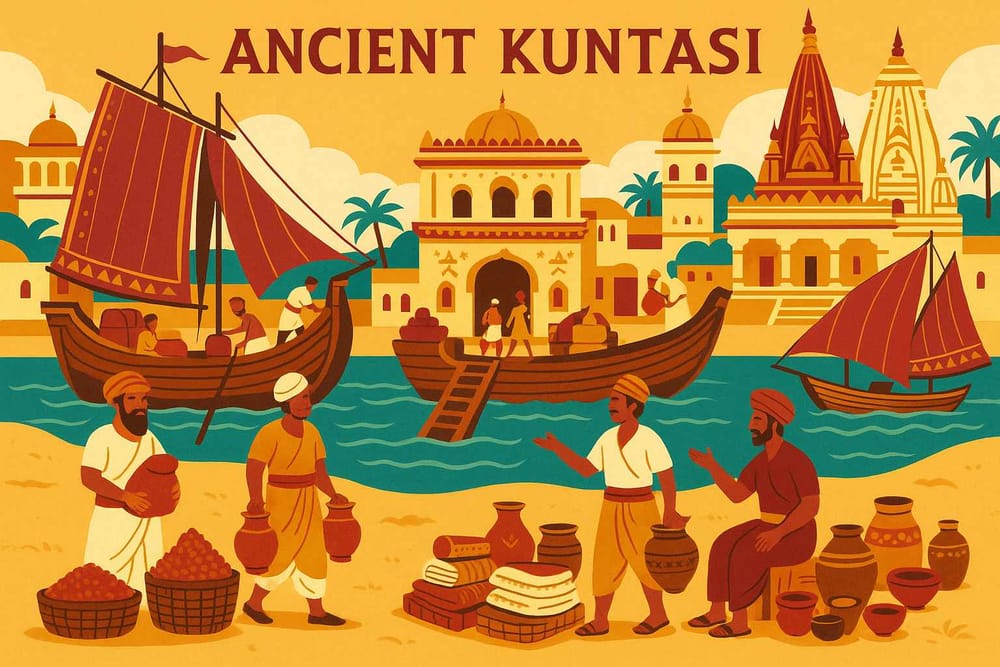
Ancient Port of Kuntasi: A Forgotten Marvel Emerges
Sometimes, when you stand on the soil of our incredible country, you can almost feel the echoes of the past. It’s a land where every corner holds a story, a secret waiting to be unearthed. Imagine a bustling port town from over 4,500 years ago, where ships laden with precious goods set sail for distant lands. This isn’t a fantasy; this was the reality of Kuntasi, an ancient Harappan port in Gujarat, a true forgotten marvel that tells a tale of our ancestors' incredible ingenuity and global vision.
The rediscovery of Kuntasi is like finding a missing chapter in the grand book of Indian history. It doesn't just add to our knowledge of the Indus Valley Civilization; it fills our hearts with pride, reminding us of a time when our maritime skills and craftsmanship were celebrated across the world. Let’s journey back in time together and explore the legacy of this remarkable place.
The Historical Heartbeat of Kuntasi: An Artery of Ancient Trade
During the peak of the Harappan era, Kuntasi was not just a settlement; it was a critical lifeline connecting the resource-rich lands of inland India with the vast maritime trade routes of the ancient world. Nestled strategically near the Gulf of Kutch, this port was a buzzing hub of commerce. It was from here that the master artisans of the Indus Valley sent their creations—exquisite beads, shimmering semi-precious stones, and intricately designed pottery—to far-off civilizations like Mesopotamia.
Unlike sprawling Harappan cities such as Mohenjo-Daro, Kuntasi was compact and highly specialized. Its fortified walls and well-planned layout suggest it was designed with a clear purpose: to be a secure center for manufacturing and trade. The focus here was on creating high-value goods for export, making it a powerful economic engine of its time. Learning about Kuntasi's role as a gateway to the past helps us appreciate the sophisticated economic systems our ancestors had established.
Treasures Unearthed from the Sands of Time
The archaeologists who have worked at Kuntasi have uncovered more than just ruins; they've found tangible proof of a sophisticated society with incredible skills. Each discovery paints a vivid picture of life in this ancient port:
- Workshops of Master Craftsmen: Excavations have revealed dedicated bead-making workshops, complete with raw materials and tools. This shows a systematic, almost factory-like approach to producing beautiful decorative items that were in high demand in international markets.
- Gems and Stones that Tell a Story: The discovery of semi-precious stones like carnelian and agate, along with the tools to cut and polish them, highlights the advanced gem-cutting techniques possessed by the Harappan people. These weren't just stones; they were a symbol of their artistic and technological prowess.
- Echoes of Daily Life in Pottery: The beautiful pottery fragments found here are more than just archaeological artifacts. They are a window into the daily lives, artistic sensibilities, and cultural practices of the people who called Kuntasi home thousands of years ago.
- Remains of a Thriving Port: The most telling discoveries are the remnants of ancient docks and large storage facilities. This is concrete evidence of a well-managed port capable of handling large volumes of goods, preparing them for long sea voyages, and showcasing impressive maritime ingenuity.
What Makes Kuntasi So Special?
While Lothal is another famous Harappan port, Kuntasi stands out for its unique character. Its modest size was its strength, allowing for a specialized focus on manufacturing and trade security rather than sprawling urban development. The entire settlement seems to have been built around protecting its valuable goods, with strong fortifications underscoring its commercial importance.
The site's proximity to the sources of raw materials, like semi-precious stones, made the production process incredibly efficient. This strategic planning gives us deep insights into the ancient civilization's economic and logistical brilliance. Kuntasi wasn't just a port; it was a masterfully planned industrial hub of the ancient world.
Answering Your Curiosities about this Ancient Marvel
The story of Kuntasi often brings up so many questions in our minds. Let's explore some of the things people are most curious about.
The Enduring Significance of this Ancient Port
So, what makes Kuntasi so historically important? It’s significant because it serves as a powerful testament to the advanced maritime capabilities and complex trade networks of the Indus Valley Civilization. It proves that our ancestors were not isolated but were active participants in global trade, shaping the ancient world's economy.
Pinpointing Kuntasi's Location
If you wish to trace its location, you will find Kuntasi in modern-day Gujarat, situated near the banks of the Phulki River. This river was once a navigable channel that connected the port to the sea, making it a perfect spot for a bustling trade center.
Why It's Called a 'Forgotten Marvel'
Despite its immense historical and archaeological value, Kuntasi has remained in the shadows of more famous Harappan sites like Mohenjo-Daro and Harappa. It is this relative obscurity, combined with its incredible story, that makes it a true "forgotten marvel," a hidden gem of our national heritage.
The True Age of this Harappan Gem
It's almost mind-boggling to think about how old Kuntasi is. The port dates back to the Mature Harappan period, around 2500 BCE. This means it is over 4,500 years old, a silent witness to millennia of history.
India’s Ancient Global Connections
Yes, the evidence strongly suggests that Kuntasi was a key player in international trade. Artifacts and seals found here have parallels with those discovered in Mesopotamian sites, indicating a well-established trade route between these two great ancient civilizations.
Why We Must Preserve Kuntasi's Legacy
Preserving sites like Kuntasi is like preserving our family's oldest and most precious stories. It helps us understand the genius of our ancestors—their economic planning, their artistic skills, and their adventurous spirit. Protecting this heritage offers invaluable lessons and a deep sense of connection to our roots for generations to come.
Just as archaeologists work to preserve the physical remnants of our past, we at Bhaktilipi are dedicated to preserving the timeless devotional and cultural stories that form the soul of our heritage. We believe these stories, much like the ruins of Kuntasi, hold profound wisdom and inspiration.
We work to collect, digitize, and share these rare and meaningful works, making them accessible for everyone. By reimagining these ancient tales for today's readers, we hope to keep the flame of our culture burning bright. If you love stories of our glorious past and rich traditions, we invite you to connect with us. Subscribe to our YouTube channel and follow us on Facebook and Instagram for a daily dose of inspiration.
Rediscovering Our Glorious Past
The ancient port of Kuntasi is a powerful reminder of India's magnificent maritime history. It stands as a symbol of our ancestors' ingenuity and their bold engagement with the world. Exploring its story isn’t just a history lesson; it's an experience that fills us with wonder and respect for the vibrant tapestry of India's past. Let us cherish this hidden gem and ensure its legacy continues to inspire us all.
A passionate group of people dedicated to preserving India's knowledge of Dharma, Karma, and Bhakti for ourselves and the world 🙏.
Comments
Related in
Ancient Port of Kuntasi: Maritime History Explored
Close your eyes for a moment and imagine the salty air of the Gujarat coast, not as it is today, but thousands of years ago. Picture bustling docks, the clang of copper tools, and majestic ships with sails billowing in the wind, ready to journey towards distant lands like Mesopotamia.
Ancient Port of Kuntasi- Gateway to the Past: History and Exploration
Imagine standing on the banks of a quiet river in Gujarat, the wind carrying whispers from thousands of years ago. This isn't just any land; you're at Kuntasi, a place that was once a bustling port, a vibrant artery of the great Indus Valley Civilization. It