
A Taste of Bengal at Home: Vegetarian and Classic Recipes You Cook Now
There's a certain magic that wafts from a Bengali kitchen. It’s not just the aroma of spices; it’s the fragrance of memories, of festivals, of generations pouring their love into a pot. I still remember my grandmother, her hands moving with an old-world grace, transforming simple vegetables into a feast for the senses. That, my friends, is the heart of Bengali cuisine—a culinary tradition where every dish tells a story, and every meal is a celebration of life itself.
While many associate Bengal with its famous fish curries, there is a whole universe of vegetarian food, known as niramish, that is equally rich and profoundly flavorful. This food isn't just for daily meals; it's the food of devotion, prepared with utmost purity during pujas and special occasions. Let’s embark on a journey to bring this very essence, this taste of Bengal, right into your kitchen.
The Soul of Bengali Cooking: More Than Just Ingredients
To truly understand Bengali food, you need to know its two foundational pillars. These aren't just ingredients; they are the very soul, the praan, of the cuisine.
The Golden Pungency of Mustard Oil
Forget any other cooking oil when you step into a Bengali kitchen. Here, mustard oil (shorsher tel) is king. Its sharp, pungent aroma is the signature of an authentic Bengali dish. When heated, this beautiful golden oil mellows, infusing vegetables and spices with a deep, earthy flavour that is simply irreplaceable. It’s the secret behind the zing in a simple aloo bhaja (fried potato) and the depth of a complex gravy.
Panch Phoron: The Symphony of Five Spices
The second secret is a magical spice blend called Panch Phoron. It’s not a powder, but a mix of five whole spices: fennel (mouri), cumin (jeera), fenugreek (methi), mustard (shorshe), and nigella seeds (kalo jeere). When these seeds splutter in hot mustard oil—a process called phoron—they release an orchestra of aromas that forms the flavour base for countless dishes. This single blend can transform a simple vegetable stir-fry into a culinary masterpiece.
A Journey Through Iconic Vegetarian Dishes
Bengali vegetarian cooking is a celebration of seasonal produce. Each dish is designed to bring out the natural taste of the vegetables, enhanced by a delicate balance of spices.
- Shukto: The Elegant Beginning
A traditional Bengali meal often begins with Shukto, a delicately balanced, slightly bitter stew of various vegetables like bitter gourd, raw banana, drumsticks, and sweet potato. It’s cooked in a light, milky gravy with a hint of ginger and radhuni (wild celery seeds). Shukto is meant to cleanse the palate and prepare your taste buds for the richer dishes to follow. It’s a testament to the Bengali culinary philosophy of balancing all tastes—bitter, sweet, and savoury. - Dhokar Dalna: The Deceptive Delight
The word 'Dhoka' means to deceive, and this dish does just that! It tricks you into thinking you're eating something non-vegetarian. These are delicious, diamond-shaped cakes made from ground lentils (chana dal), which are first steamed or fried and then simmered in a rich, flavourful gravy of tomatoes, ginger, and cumin. It’s a festive dish, often made during special occasions, that feels both hearty and luxurious. - Aloo Posto: The Ultimate Comfort Food
If there’s one dish that spells 'comfort' for a Bengali, it’s Aloo Posto. It’s a deceptively simple preparation of potatoes cooked in a thick, nutty paste of poppy seeds (posto), seasoned with green chillies and a final drizzle of pungent mustard oil. The creamy texture of the poppy seed paste combined with the soft potatoes is pure bliss. It’s a dish that celebrates minimalism and proves that you don’t need a hundred spices to create something unforgettable. - Begun Pora: The Smoky Sensation
This is Bengal's answer to Baba Ghanoush, but with a rustic, desi twist. A whole eggplant is roasted directly over a flame until the skin is charred and the inside is soft and smoky. The pulp is then mashed with raw mustard oil, chopped onions, green chillies, and fresh coriander. The resulting dish, Begun Pora, is a smoky, pungent, and incredibly flavourful side that pairs beautifully with hot rotis or rice.
Food as an Offering: The Spiritual Connection
In Bengal, food and faith are deeply intertwined. During festivals like Durga Puja and Saraswati Puja, vegetarian food takes centre stage. The special meal prepared as an offering to the deities, known as bhog, is always purely vegetarian and cooked without onion or garlic. Dishes like Khichuri (a rich rice and lentil dish), Labra (a mixed vegetable curry), and tomato chutney are staples of this divine feast.
This practice highlights a beautiful aspect of our culture—how food can be a bridge to the divine. Preparing these dishes connects us to our roots and rituals. This is similar to the experience of enjoying pure, sattvic meals on a pilgrimage, which is a journey in itself. If you're interested in such culinary spiritual journeys, you might enjoy reading about the vegetarian delights found near temples across India.
Tips for Authentic Bengali Cooking at Home
Bringing these flavours into your own kitchen is easier than you think. Keep these simple tips in mind:
- Don't Fear the Mustard Oil: To get the authentic taste, use cold-pressed mustard oil. Heat it until it just starts to smoke slightly before adding your spices. This helps to mellow its pungency while retaining its unique flavour.
- Master the Phoron: The tempering of spices is crucial. Let the whole spices of the Panch Phoron splutter completely in hot oil to release their full aroma before you add the vegetables. This small step makes a huge difference.
- Balance Sweet and Savoury: Many Bengali vegetarian dishes have a hint of sweetness to balance the spices. A small pinch of sugar or a little jaggery can elevate the taste of a gravy or dal significantly.
Frequently Asked Questions about Bengali Cuisine
Many people are curious about what gives Bengali food its unforgettable character. The secret truly lies in a beautiful trinity of things: the foundational flavour of mustard oil, the aromatic magic of the Panch Phoron five-spice blend, and a masterful balance of sweet and spicy notes in many dishes. This combination creates a flavour profile that is robust, complex, and utterly unique.
And if you're wondering whether you can enjoy this cuisine without its famous fish dishes, the answer is a resounding yes! The world of Bengali vegetarian food is vast and incredibly satisfying. From the comforting Aloo Posto (potatoes in poppy seed paste) to the rich Cholar Dal (a sweet and savoury lentil dish often served with fluffy luchis), there are endless options that form the heart of traditional Bengali meals.
If you're starting your Bengali cooking journey, you might ask which spices are absolutely essential. Besides the crucial Panch Phoron, keep turmeric, cumin powder, red chilli powder, and whole green chillies handy. And of course, a good quality mustard oil is non-negotiable for that authentic touch. While you can substitute it with other oils, be prepared for a noticeable difference in taste and aroma; the true soul of the dish lies in the mustard oil.
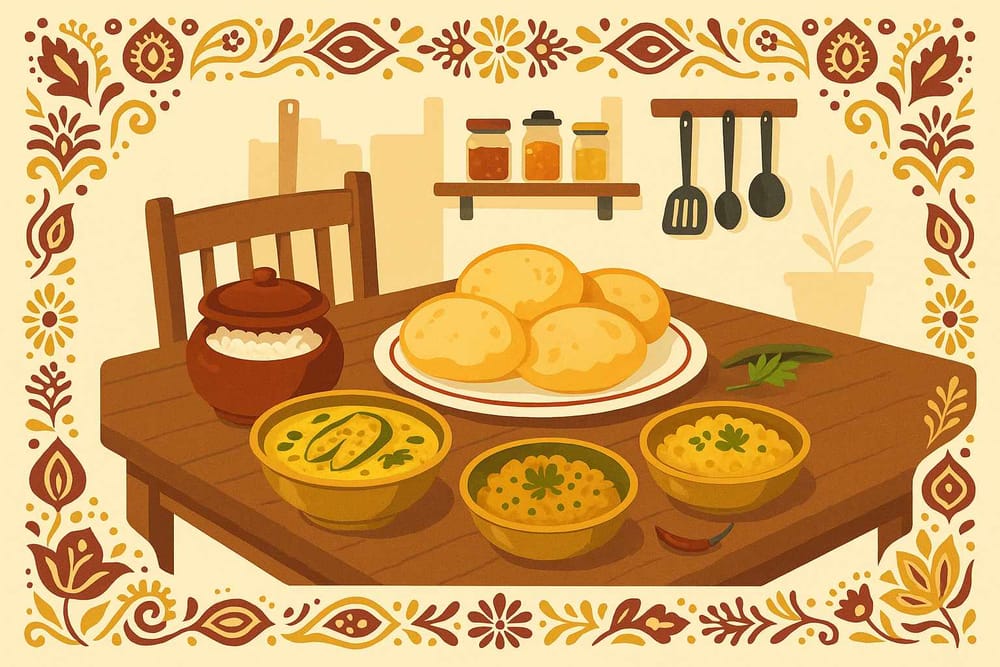
A must-try dish that truly captures the spirit of Bengal is the classic combination of Luchi with Cholar Dal. The fluffy, deep-fried bread paired with the slightly sweet lentil curry, often garnished with coconut pieces, is a match made in heaven and a beloved festive meal.
Cooking these classic recipes is not just about following steps; it’s about participating in a timeless tradition. It’s about creating nourishment for the body and joy for the soul, connecting with a rich heritage right in your own home.
Your Journey with Bhaktilipi
At Bhaktilipi, we believe in preserving and sharing these timeless traditions. Food, like stories and prayers, is a vital part of our cultural and spiritual fabric. By exploring recipes like these, you're not just learning to cook; you're connecting with a legacy of devotion and love.
Our platform is a dedicated space for devotional literature, inspiring stories, and authentic traditions that enrich daily life. We invite you to explore more and stay connected with your roots.
Get the latest updates by subscribing to our newsletter. Follow our journey on Facebook, Instagram, and YouTube for a regular dose of devotional stories, traditional recipes, and spiritual insights. Join our community to stay rooted in tradition while embracing modern life.
A passionate group of people dedicated to preserving India's knowledge of Dharma, Karma, and Bhakti for ourselves and the world 🙏.