
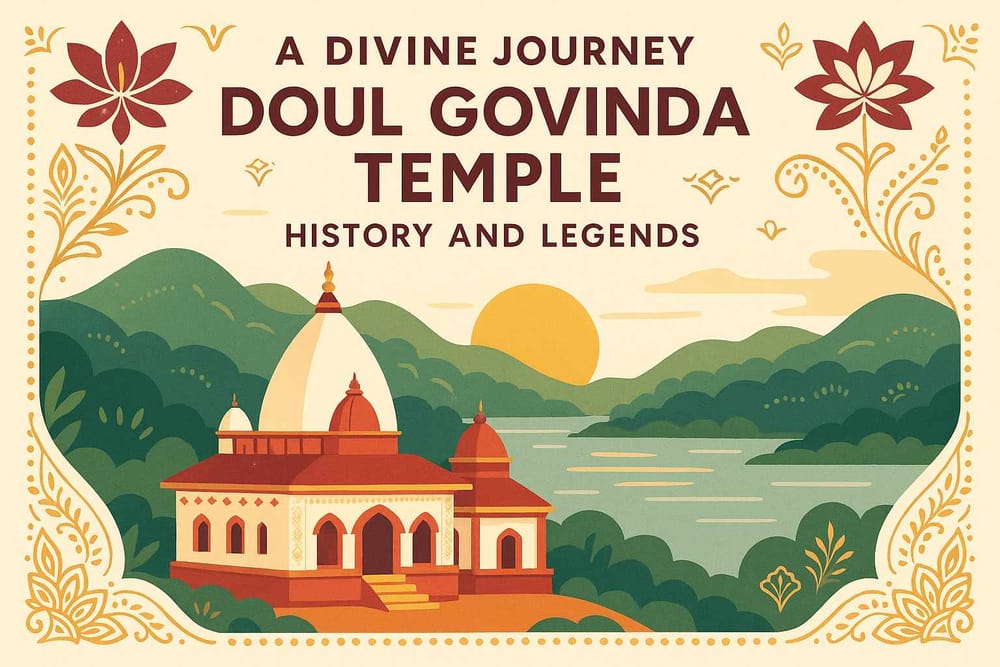
A Divine Journey: Doul Govinda Temple History and Legends
There are some places that you don't just visit; you feel them in your soul. Standing on the northern banks of the mighty Brahmaputra in Guwahati, with the gentle river breeze carrying chants and the scent of incense, you’ll find one such sacred space—the Doul Govinda Temple. This isn't just a structure of bricks and mortar; it's a living, breathing testament to a faith that has flowed through Assam for centuries, much like the river beside it. It’s a place where every prayer feels personal and every story feels like it happened just yesterday.
A History Soaked in Devotion and Miracles
The story of the Doul Govinda Temple isn't found in dusty old records alone; it's woven into the very fabric of Assamese culture. Its roots go back more than 150 years, a time when the powerful Bhakti movement, led by Mahapurush Srimanta Sankardeva, was nurturing the spiritual heart of the region. The teachings of Vaishnavism found generous patrons in the Koch and Ahom dynasties, who helped build temples and Namghars dedicated to Lord Vishnu. The Doul Govinda Mandir, renovated to its present form in 1966, stands as a proud legacy of this era of deep spiritual awakening.
This temple is more than just a historical site. It’s a centre of unwavering faith, drawing devotees who seek the blessings of Lord Krishna in his loving Govinda form. The sacred Brahmaputra flowing nearby only deepens its spiritual aura, considered a source of purity and divine grace.
The Divine Leela: How Govinda Chose His Home
Every temple has a story, but the tale of Doul Govinda’s origin feels like a leela straight from the scriptures. As the local legend goes, it all began with a Brahmin’s cow. This particular cow would wander off daily into the Sandhyasar forest and lovingly pour all its milk over a specific bush of *birina* grass. Intrigued by this strange, daily ritual, the villagers decided to dig at that very spot.
And what they found left them speechless. Buried beneath the earth was a breathtakingly beautiful idol of Lord Krishna, gracefully playing his flute. A devout man named Ganga Ram Barooah carefully brought the divine idol and enshrined it in Rajaduar. But the Lord had one more miracle to show. During a festival, there was some confusion about which idol should be placed on the ‘Doul’ (the festival chariot). At that very moment, the newly found idol moved four of its fingers forward, as if signalling, “I am the one.” It was a clear sign of his divine will. From that day on, he came to be known and worshipped as Doul Govinda.
The Heartbeat of Celebration: Festivals and Daily Worship
Life at Doul Govinda Temple revolves around the loving service of the Lord. The day begins with morning prayers and ends with the evening aarti, with bhog offerings and melodious bhajans filling the air in between. The temple complex also includes a Namghar, a congregational prayer hall that is the cornerstone of Assamese Vaishnavism, where devotees gather to chant and sing praises together.
While the temple is alive with devotion every single day, it truly comes alive during festivals. The most prominent of these is Holi, celebrated here as ‘Doul Jatra’ or ‘Doul Utsav’. For days, the temple grounds transform into a vibrant canvas of colours, music, and unrestrained joy. Thousands of devotees flock here to play with colours, sing traditional Holi songs, and feel the divine presence of Krishna celebrating with them. It’s an experience that fills your heart with pure, unadulterated bliss.
These beautiful stories and vibrant traditions are the soul of our culture. At Bhaktilipi, we are dedicated to bringing these timeless narratives to you, helping you connect with the divine in your everyday life. For a deeper dive into our spiritual heritage, explore our collection of articles on Bhaktilipi.in.
FAQs: Your Questions on Doul Govinda Temple Answered
Many who hear the tales of this sacred place have questions that come from a place of curiosity and reverence. Let's explore some of them.
What is the history behind the Doul Govinda Temple?
The temple's origins are deeply connected to the Vaishnavite movement in Assam, which flourished over 150 years ago. It wasn't built in a day but evolved as a centre of faith with the support of local rulers and, most importantly, the unwavering devotion of the common people. It stands as a spiritual landmark dedicated to Lord Krishna as Govinda.
Is it true that a king built the temple?
While Ahom kings like Rajeswar Singha were great patrons of Vaishnavism and supported many temples, there's no single king credited with building the Doul Govinda Temple. Its establishment is more a story of community faith and divine will, with devotees and local patrons playing a crucial role over generations. The true builder, as the legend suggests, was Lord Krishna himself, who chose this spot for his devotees.
Why is the Doul Govinda Temple so famous?
Its fame comes from a beautiful blend of things. Firstly, its serene and powerful location on the banks of the Brahmaputra makes it a perfect place for spiritual solace. Secondly, the miraculous legends associated with its origin fill devotees' hearts with awe and faith. And finally, the grand and joyous celebration of Doul Utsav (Holi) makes it a vibrant cultural hub, attracting people from all over the country.
What are the main legends associated with this temple?
The most cherished legend is about the divine idol of Lord Krishna being discovered after a cow mysteriously offered its milk at a particular spot. This story of a miraculous appearance makes the temple's deity incredibly special. Another key legend is how the idol itself signalled its desire to be worshipped as ‘Doul Govinda’, cementing its name and significance in the hearts of devotees.
The spiritual landscape of Assam is rich and diverse. While Doul Govinda Temple shines as a beacon of Vaishnavism, the region is also home to powerful centres of Shakti worship. You can learn more about another significant shrine, the Ugratara Temple, and discover the multifaceted devotion that thrives in this land.
A Journey that Stays with You
A visit to the Doul Govinda Temple is more than a pilgrimage; it's a chance to connect with a stream of devotion that has been flowing for generations. It reminds us that faith isn't just about grand rituals, but about the simple, heartfelt stories that bind us to our culture and to the divine. It’s a gentle reminder that when we seek God with a pure heart, He always finds a way to reveal Himself.
About Bhaktilipi
© 2025 Bhaktilipi – Crafted with devotion.
Bhaktilipi is your digital companion for exploring timeless devotional literature, rituals, and stories. We preserve and present authentic spiritual knowledge to inspire and connect with today’s readers.
Why Bhaktilipi?
We bring you accurate and meaningful insights into India’s rich devotional traditions, all in one place. From ancient scriptures to temple legends like the history of Doul Govinda Temple, our platform helps you deepen your understanding of faith and culture.
Stay Connected
Discover more by subscribing to our YouTube channel for videos on spiritual topics, following us on Instagram for daily inspiration, or joining our community on Facebook. Sign up for our newsletter to never miss updates!
A passionate group of people dedicated to preserving India's knowledge of Dharma, Karma, and Bhakti for ourselves and the world 🙏.
Comments
Related in
The Sacred History of Doul Govinda Temple: Royal Origins and Legacy
Imagine a gentle hill overlooking the majestic Brahmaputra, a place where a divine secret was once revealed not by a king's grand decree, but by the quiet devotion of a humble cow. This isn't just a story; it's the very soul of the Doul
Doul Govinda Temple FAQs: Get Answers Now
There are some places where you don't just go, you arrive. The journey itself becomes a part of the darshan. Imagine a gentle ferry ride, the vast, calming expanse of the Brahmaputra River around you, and the first glimpse of a serene temple nestled on the northern bank.
The Sacred Legacy: Doul Govinda Temple's History Emerges
Imagine standing on the gentle slopes of Chandra Bharati hill in North Guwahati, with the mighty Brahmaputra river flowing peacefully nearby. You can almost hear the soft chanting and the distant temple bells mingling with the river breeze. This is the feeling you get at the Doul Govinda Temple, a